KMP算法
»>配合视频食用,效果更佳!
KMP简介
KMP算法主要用于字符串匹配。
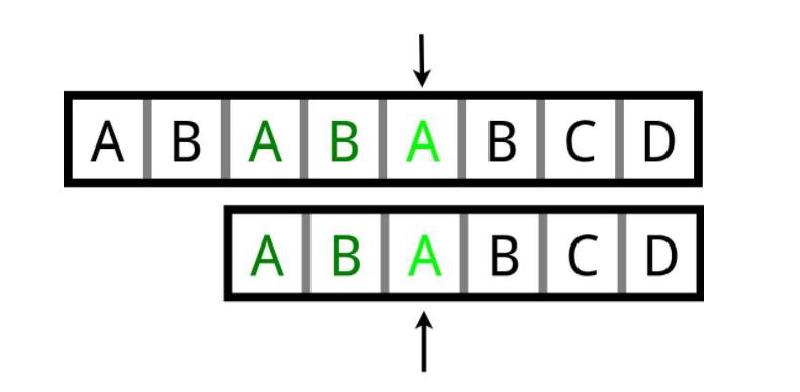
KMP的主要思想是当出现字符串不匹配时,可以知道一部分之前已经匹配的文本内容,可以利用这些信息避免从头再去做匹配了。
前缀表
前缀表是用来匹配回溯的,它记录了模式串与主串不匹配时,模式串应该从哪里开始重新匹配。
前缀: 不包含最后一个字符的所有以第一个字符开头的连续子串。
后缀:不包含第一个字符的所有以最后一个字符结尾的连续子串。
前缀表:记录下标i之前(包括i)的字符串中,有多大长度的_相同前缀后缀_。
长度为前3个字符的子串aab,其最长相同前后缀的长度为0.
长度为前4个字符的子串aaba,其最长相同前后缀的长度为1.
利用前缀表匹配字符串:
前缀表与next数组
next数组可以有很多种版本,其影响的仅是匹配失败后回溯时依据的下标。本文采用的时前缀表统一减去一之后的版本,即
1
2
3
|
模式串:	"aabaaf"
前缀表:	[0, 1, 0, 1, 2, 0]
next数组:[-1, 0, -1, 0, 1, -1]
|
next数组的构建
- 初始化
- 处理前后缀不同的情况
- 处理前后缀相同的情况
 1
 2
 3
 4
 5
 6
 7
 8
 9
10
11
12
13
14
15
16
17
18
|
void get_next(int *next, char *needle)
{
    // 初始化
    // j时前缀的末尾,也代表了前缀的长度
  	// 因为只有相等的时候j才推进,所以它能代表最长相等前后缀的长度,即next数组的值
    int j = -1;
    next[0] = j;
    // 从下标为1开始遍历,i作为后缀的末尾
    for(int i = 1; i < strlen(needle); i++)
    {
        //  由于可能存在递归回退,所以要用while
        while(j >= 0 && needle[i] != neddle[j+1])	// 前后缀不相同
            j = next[j];	// 回溯到前一位next数组对应的值,由于这里时j+1,所以应该是next[j]
        if(needle[i] == needle[j+1])	// 相同继续推进
            j++;
        next[i] = j;	// 将j(前缀的长度)赋值给next[i]
    }
}
|
用next数组匹配
 1
 2
 3
 4
 5
 6
 7
 8
 9
10
11
12
13
14
15
16
17
18
|
int KMP(char *haystack, char *needle)
{
    if(strlen(needle) == 0)
        return 0;
    int *next = malloc(strlen(needle) * sizeof(int));
    get_next(next, needle);
    int j = -1;
    for(int i = 0; i < strlen(haystack); i++)
    {
        while(j >= 0 && haystack[i] != needle[j+1]) // 回溯
            j = next[j];
        if(haystack[i] == needle[j+1])  // 向前遍历
            j++;
        if(j == strlen(needle) - 1) // 判断是否匹配完成
            return(i - strlen(needle) + 1); // 返回haystack的下标
    }
    return -1;
}
|
C语言实现完整代码
 1
 2
 3
 4
 5
 6
 7
 8
 9
10
11
12
13
14
15
16
17
18
19
20
21
22
23
24
25
26
27
28
29
30
31
32
33
34
35
36
37
38
39
40
41
42
43
44
45
46
47
48
49
50
51
|
#include <stdio.h>
#include <string.h>
#include <stdlib.h>

int KMP(char *haystack, char *needle)
{
    if(strlen(needle) == 0)
        return 0;
    // get_next
    int *next = malloc(strlen(needle) * sizeof(int));
    int j = -1;
    next[0] = j;
    printf("next[]: [ %d ",next[0]);
    for(int i = 1; i < strlen(needle); i++)
    {
        while(j >= 0 && needle[i] != needle[j+1])
            j = next[j];
        if(needle[i] == needle[j+1])
            j++;
        next[i] = j;
        printf("%d ",next[i]);
    }
    printf("]\n");

    // KMP
    j = -1;
    for(int i = 0; i < strlen(haystack); i++)
    {
        while(j >= 0 && haystack[i] != needle[j+1])
            j = next[j];
        if(haystack[i] == needle[j+1])
            j++;
        if(j == strlen(needle) - 1)
        {
            free(next);
            return(i - strlen(needle) + 1);
        }
    }
    free(next);
    return -1;
}

int main(int argc, char **argv)
{
    if(argc != 3)
        fprintf(stderr, "Usage: ./a.out abcabcbb cab\n");

    int k = KMP(argv[1], argv[2]);
    printf("the index is: %d \n", k);
    return 0;
}
|